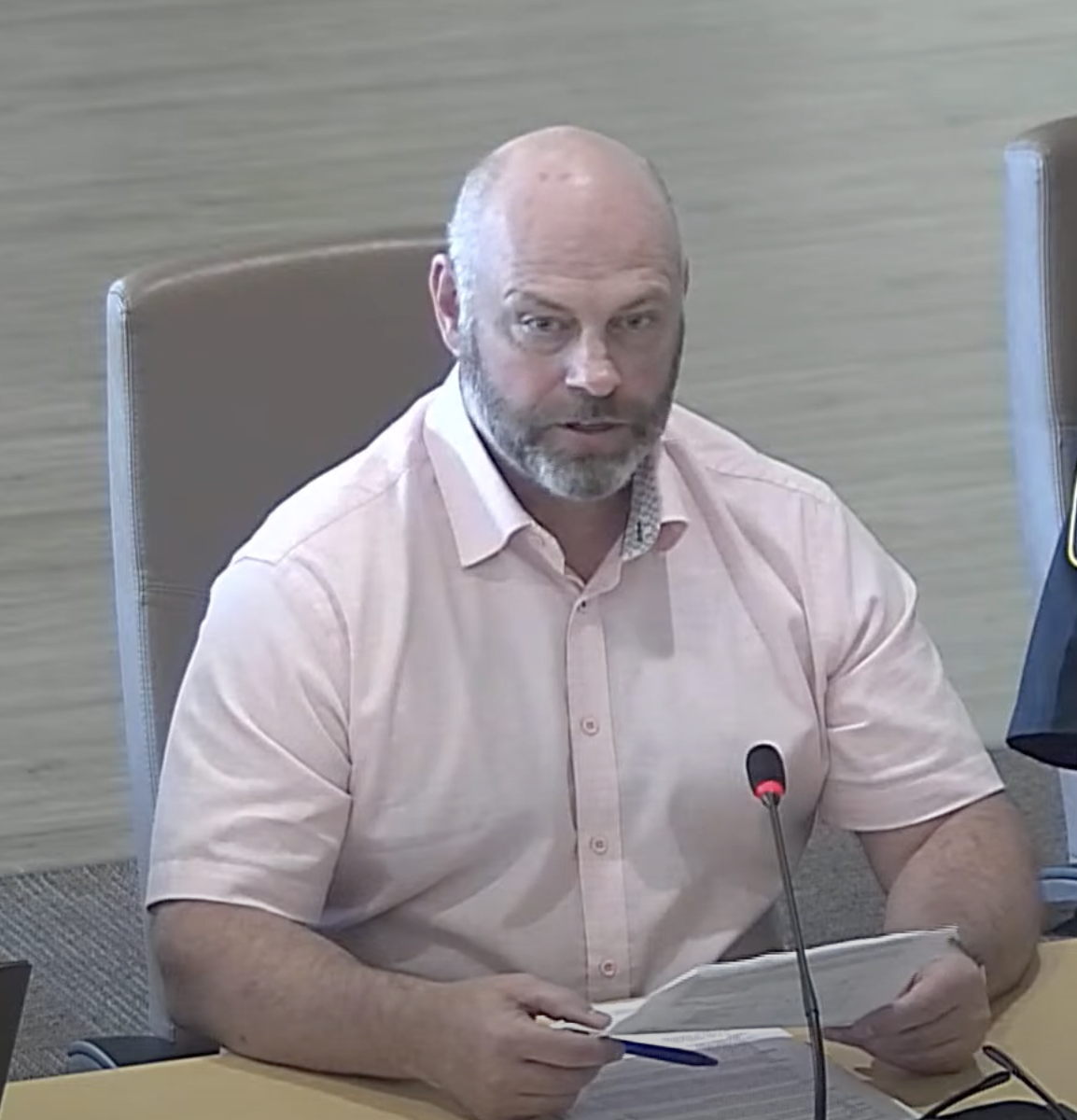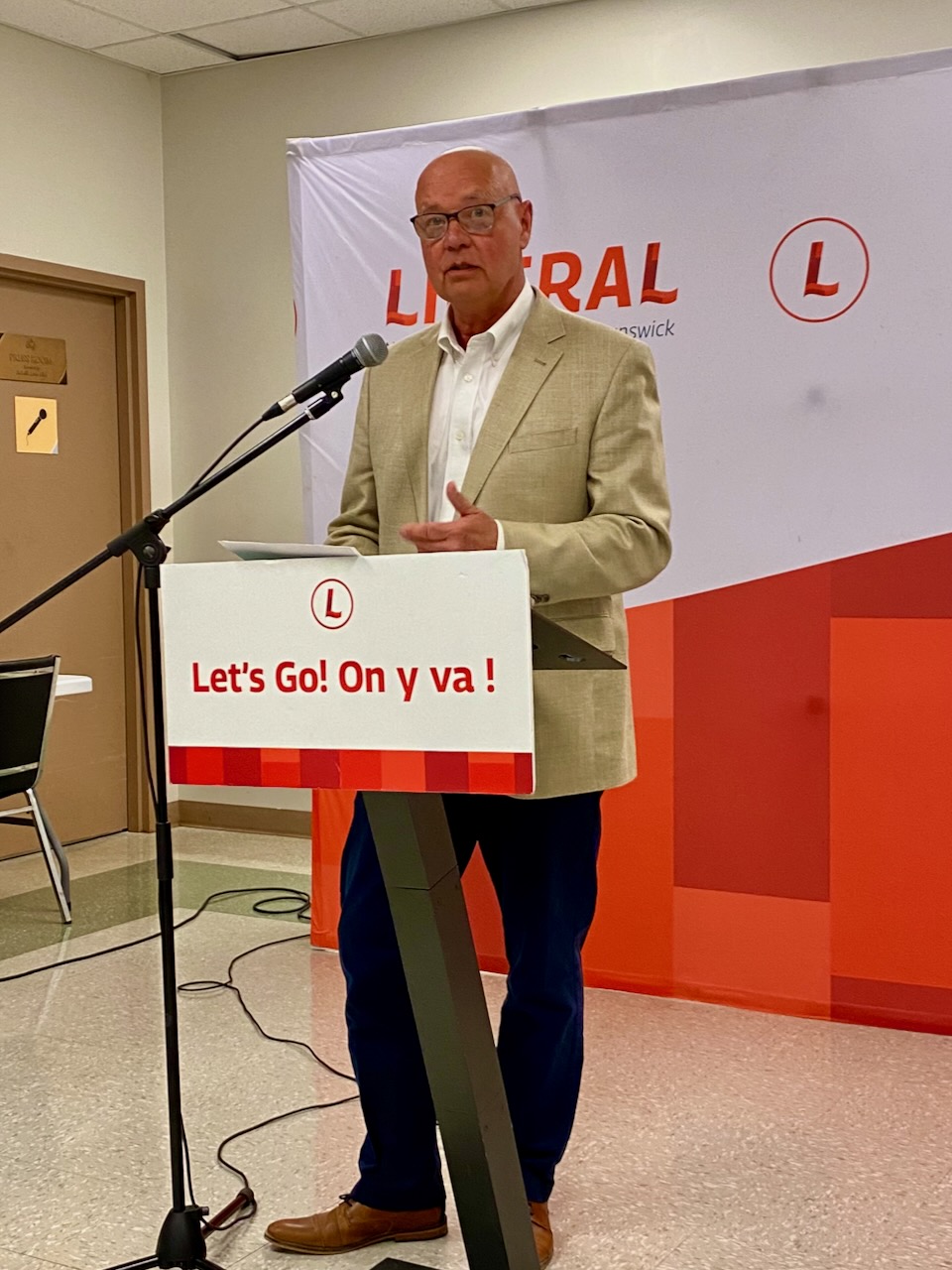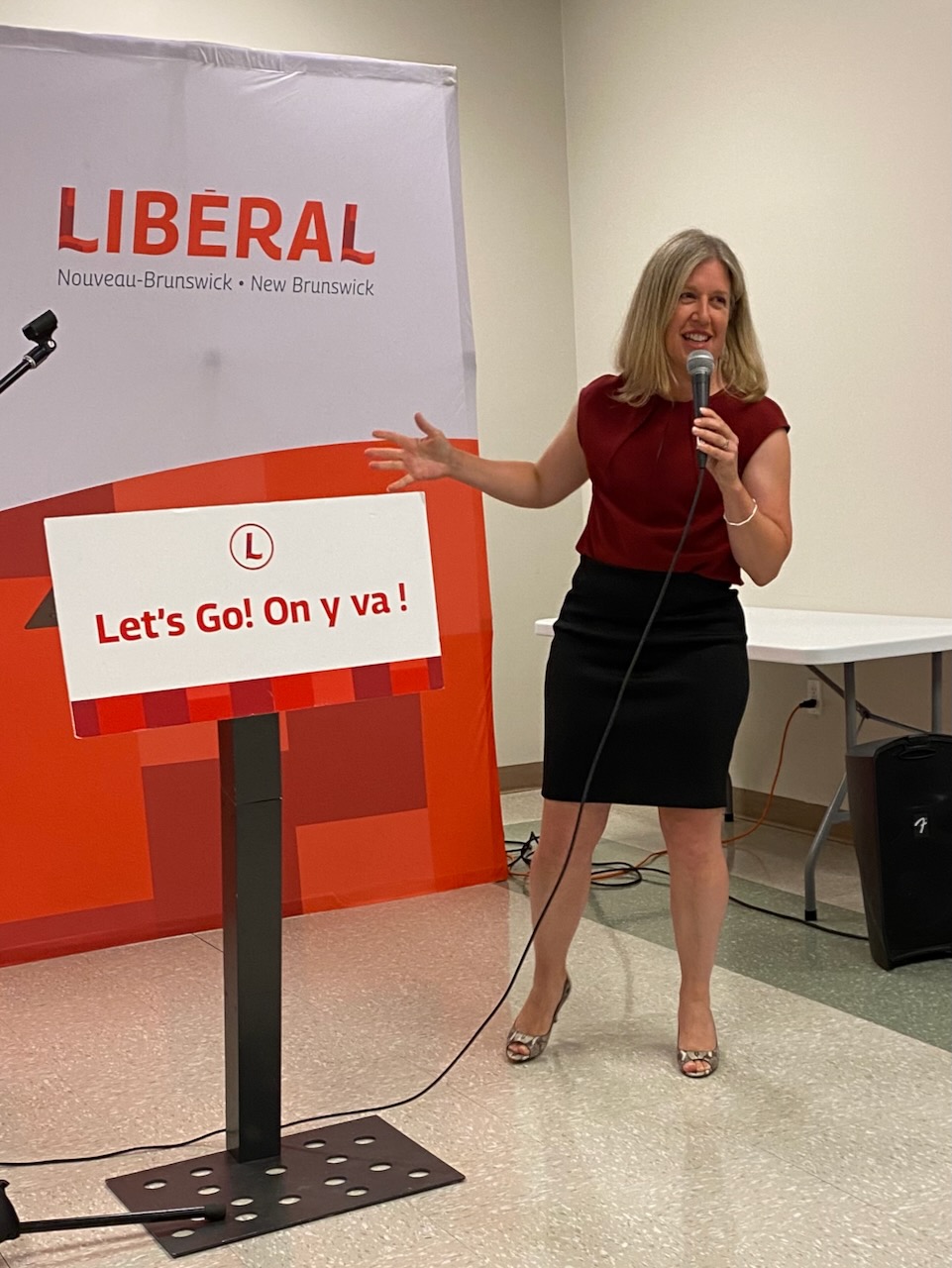
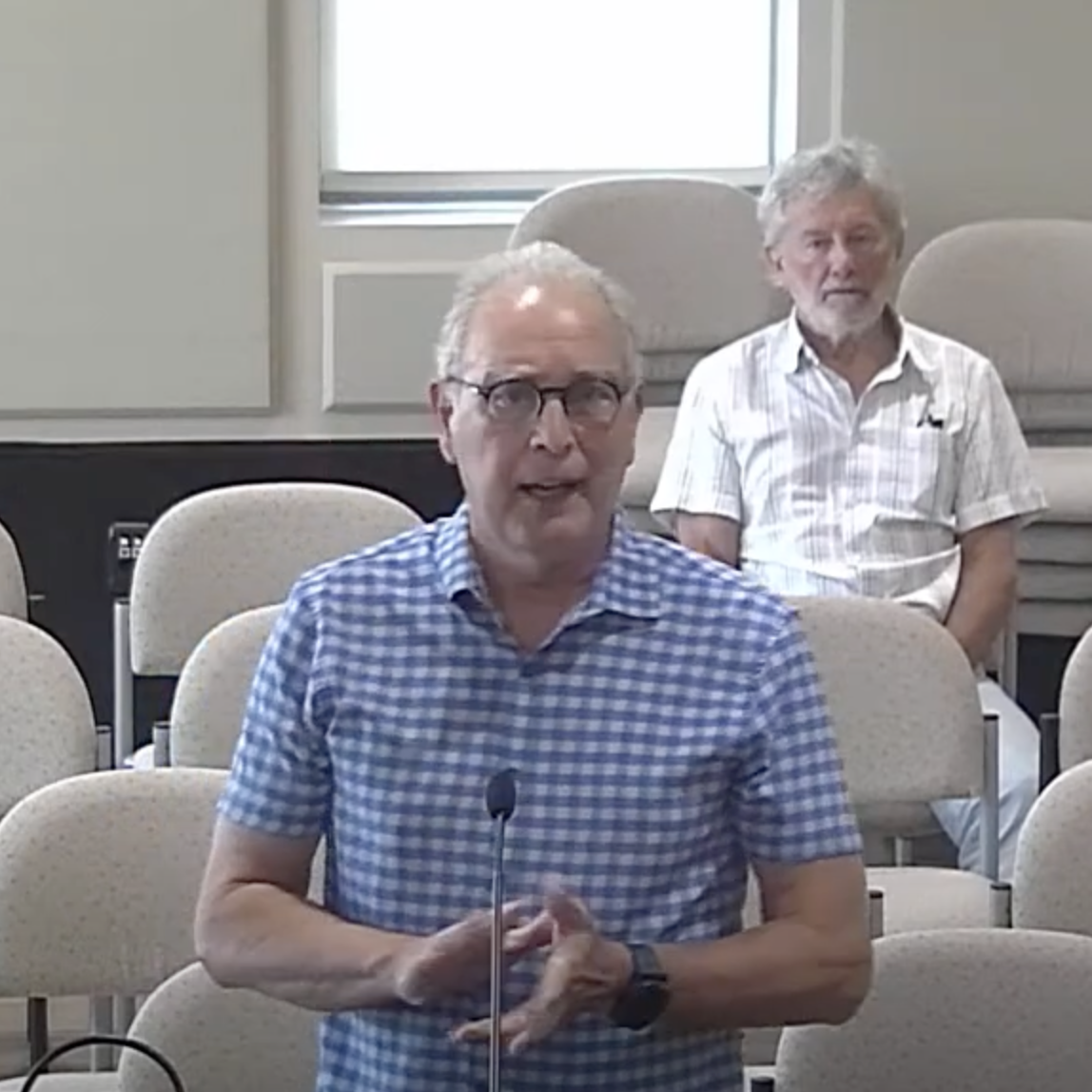
Squire St. resident Doug Bliss speaking to council about a petition that asks the town to install two speed bumps. Peter Higham is seated behind him
A longtime resident of Squire Street in Sackville says he’s disappointed with the way Tantramar council and staff have dealt with a petition from residents complaining of excessive speeding and noise on their street.
Retired Mount Allison Music Librarian Peter Higham helped gather the 17 signatures on the petition, which was sent to Mayor Andrew Black and members of council, CAO Jennifer Borne, RCMP Sergeant Eric Hanson and Bylaw Enforcement Officer Corey Springer on July 4th.
During the question period at this week’s council committee meeting, Doug Bliss, the current chair of the climate change advisory committee, who also lives on Squire Street, called on Council to respond to the residents’ concerns.
“We want to stress the urgency to the residents of Squire Street about the chronic speed problem which has gone on for two decades since a previous council installed a parking ban on the street,” Bliss said.
The petition calls on the town to install two speed bumps on Squire Street, 100 and 300 metres from where it meets Bridge Street.
Bliss took issue with Assistant Town Clerk Becky Goodwin’s report to Council on the petition and the effectiveness of speed bumps. Goodwin’s report cites one article from an American company that sells radar signs and is critical of speed humps.
Bliss said the article is not actually a “white paper” or research paper, as the company and Goodwin describe it, but only anecdotal information.

Assistant Town Clerk Becky Goodwin presenting her report on the Squire St. petition
During her report to council on the Squire Street petition, Goodwin cited the radar sign company’s list of “shortcomings and frustrations associated with speed humps” including that they are “expensive to install and maintain”, that they slow up emergency vehicles, increase “wear and tear on commercial and residential vehicles” and “reduce fuel efficiency and increase gas consumption forcing drivers to brake and accelerate repeatedly.”
Her report contained no other sources to evaluate the effectiveness of speed bumps.
She said that instead of installing speed bumps, the town would put a radar sign on Squire Street temporarily to collect data on speeding.
Town engineer Jon Eppell said the sign could be ready within a week and he too criticized speed bumps on the grounds that they interfere with snow plowing.
“The difficulty with speed bumps, like any other potential obstruction in the path of the snow plow, is that it may cause the plow blade to fetch up, damaging the equipment, jolting the driver, potentially knocking it off track,” he said.
For his part, Doug Bliss urged the town to keep an open mind and to share with the residents data it gathers on speeding.
In an e-mail today to Warktimes, Peter Higham shared information he gathered on Squire Street involving a noisy, speeding motorcycle at 56 separate times from July 8th to July 30th on afternoons, evenings and at night.
He also sent a submission he was told would be given to members of council before their meeting this week, but he notes that it was not included in Council’s package of background documents.
“I guess we were not expecting too much to come out of the meeting, but this outcome seems particularly disappointing,” Higham wrote.
To read Goodwin’s report to council and to view the Squire Street petition, click here.
To read a scientific study that acknowledges the controversy over speed bumps, but that also shows the installation of speed bumps in Toronto was associated with a a 26% reduction in pedestrian-motor vehicle collisions on local roads, click here.
To read a CBC report about the installation in Fredericton of speed cushions that do not interfere as much with emergency vehicles, click here.